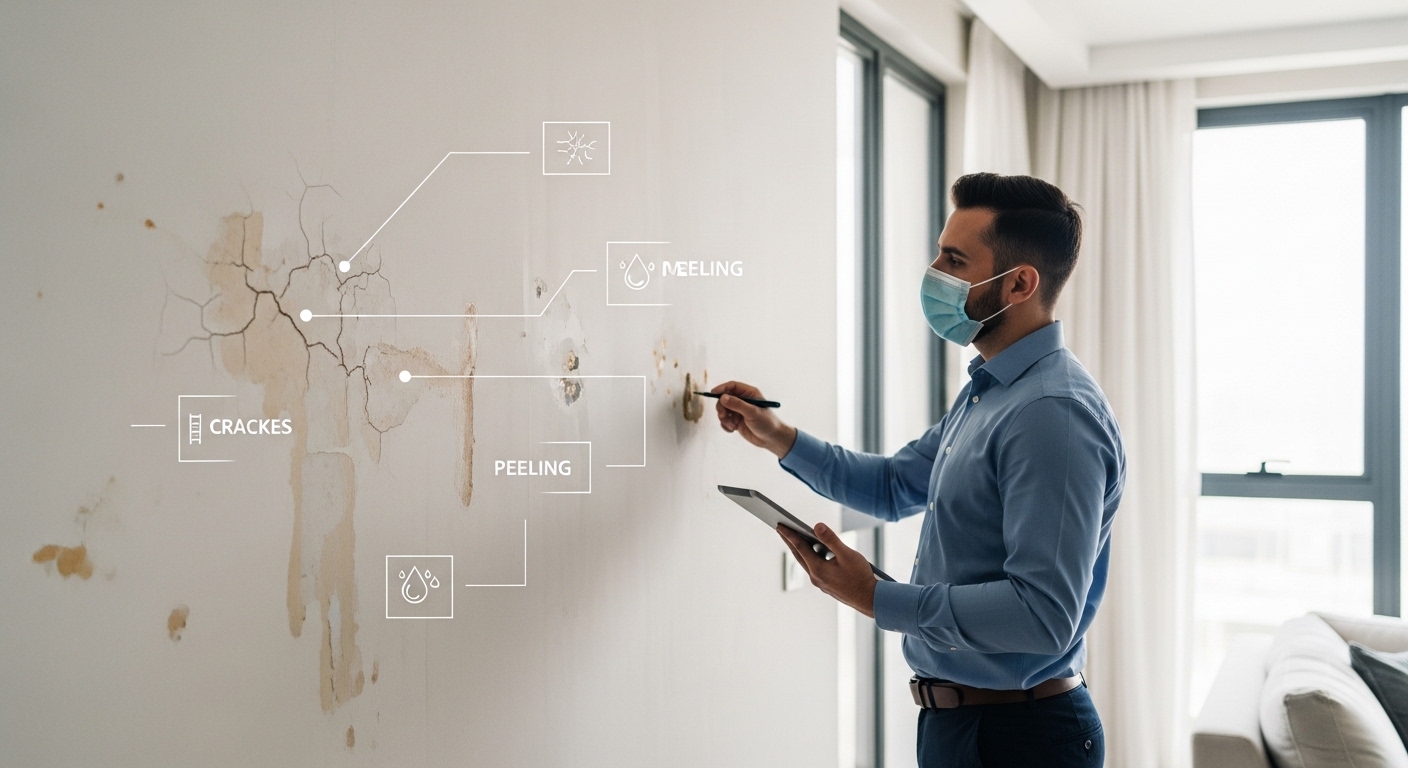
Most Dubai homeowners know their walls need attention eventually. What they are often unsure about is how urgently. Is that crack something to address this month or can it wait two years? Is the bubbling in the bathroom a cosmetic annoyance or the first sign of a moisture problem that will cost thousands to fix if left alone? Is the white powder on the exterior wall just chalking, or is it something more serious?
This guide answers those questions for every common sign of paint deterioration in Dubai homes. It is especially helpful if you are planning to hire a villa painting service Dubai, as it breaks things down in a way that is easy to understand and apply. Each sign has a severity rating, a Dubai-specific explanation of why it happens, a clear description of what happens if you ignore it, and an honest recommendation for what to do next.
By the end, you will be able to walk through your own property and assess every wall with the same framework a professional inspector from a villa painting service Dubai would use.
Quick Reference: All Signs Ranked by Urgency
Use this table for a fast overview before reading the detailed sections below. Signs are listed from least to most urgent. The cost column shows additional repair costs you face if the sign is ignored on top of the eventual repainting cost.
| Sign | Severity | Interior / Exterior | Cost If Ignored | Action |
| Paint fading / dull color | �� Cosmetic | Both | Minimal short-term | Schedule repaint |
| Chalking / powdery surface | �� Moderate | Exterior mainly | AED 500–1,500 extra prep | Repaint within 6 months |
| Hairline cracks | �� Moderate | Both | AED 800–2,000 if spread | Fill and repaint soon |
| Paint peeling at edges | �� Urgent | Both | AED 1,500–4,000 damage | Act within weeks |
| Bubbling or blistering | �� Urgent | Bathrooms / kitchens | AED 1,000–3,500 mold risk | Act immediately |
| Damp patches / dark marks | �� Urgent | Both | AED 2,000–8,000 structural | Fix source first, urgent |
| Visible mold on walls | �� Critical | Interior wet rooms | AED 3,000–15,000+ | Professional immediately |
| Efflorescence (white salt deposits) | �� Urgent | Exterior / ground level | AED 2,500–9,000 masonry | Specialist treatment needed |
| Tide marks near floor level | �� Critical | Ground floor / villas | AED 5,000–20,000+ rising damp | Structural specialist first |
| Paint color transferring to touch | �� Moderate | Interior | Cosmetic only | Repaint when convenient |
| Musty smell without visible marks | �� Urgent | Interior | AED 3,000–12,000 hidden mold | Moisture inspection first |
| Rough or gritty wall surface | �� Moderate | Exterior mainly | AED 500–1,200 extra prep | Schedule repaint |
| Cracks around door / window frames | �� Urgent | Both | AED 1,500–6,000 movement | Structural check + repaint |
A note on reading the severity ratings. Cosmetic signs affect appearance only and carry no structural risk they can be scheduled at your convenience. Moderate signs are deteriorating and will become more expensive to fix the longer you wait. Urgent signs need attention within weeks to months before they cause damage that a repaint alone cannot fix. Critical signs indicate active structural or health risk that needs professional assessment before any painting work begins.
Interior Warning Signs: What to Look For Room by Room
Interior walls are protected from direct weather but face their own set of challenges moisture from steam, humidity from air conditioning systems, daily contact from people, and the constant cycle of temperature difference between hot outdoor air and cooled indoor air. Here is how to read what your interior walls are telling you:
| Sign | Most Common Room | Dubai-Specific Cause | If You Ignore It |
| Paint bubbling | Bathroom, kitchen | Steam + wrong paint type used | Peeling within months, mold behind wall |
| Damp patches on ceiling | Any room below roof | AC condensation or roof membrane failure | Plaster collapse, structural damage |
| Visible mold | Bathroom, laundry, bedroom corners | Humidity trapped behind wall | Health risk, spreads rapidly |
| Color fading near windows | Living room, master bedroom | Direct UV through glass intense in Dubai | Cosmetic only schedule repaint |
| Paint color on clothing or hands | Hallways, children’s rooms | Old paint past its lifespan | No structural risk cosmetic issue |
| Hairline cracks near ceiling | Living room, bedroom | Building settlement + heat movement | Widen over time, moisture entry risk |
Sign 1 Paint Bubbling or Blistering
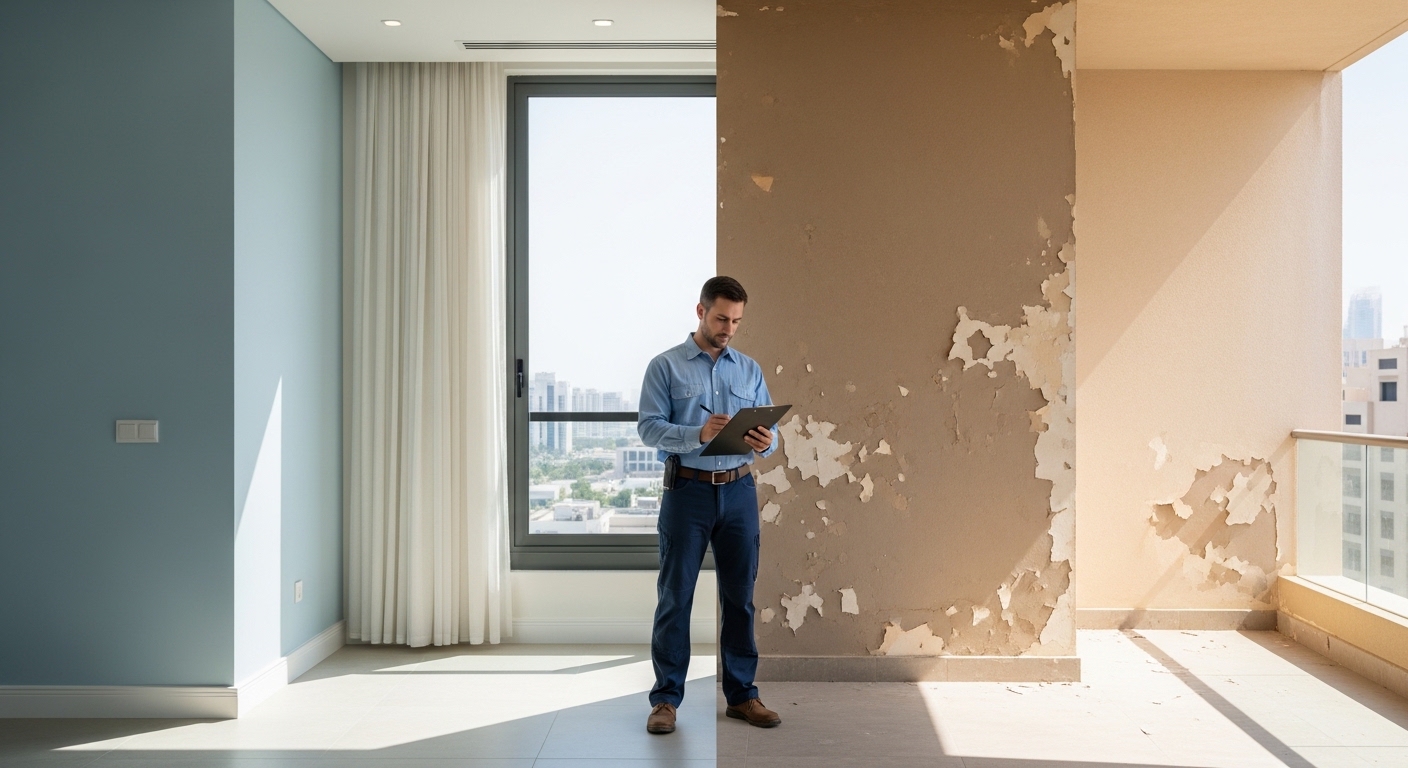
What it looks like: Small raised domes on the wall surface, ranging from a few millimetres to a few centimetres across. They may feel hollow when pressed. Sometimes they have already burst, leaving a rough, flaky patch behind.
Why it happens in Dubai: The most common cause is moisture trapped beneath the paint layer. In Dubai apartments and villas, this typically happens in two scenarios. First, the wrong paint was used standard emulsion in a bathroom or kitchen that experiences daily steam. Second, the wall was painted while still slightly damp, which happens in Dubai when walls are cleaned before painting but not allowed to fully dry in the humid indoor air conditioning environment.
Severity: Urgent. Bubbles that have not yet burst can sometimes be addressed with targeted touch-up work. Bubbles that have burst leave exposed wall surface that absorbs moisture rapidly. In bathrooms specifically, this is often the beginning of a mold problem that develops behind the wall surface before it becomes visible.
What happens if ignored: Within three to six months in a Dubai bathroom environment, burst bubbles allow moisture to penetrate the plaster. What started as a surface problem becomes a mold and damp issue that requires stripping back to the wall, mold treatment, and a full replastering and repainting job. The cost difference between addressing bubbling early versus late can be AED 1,000 to AED 3,500 on top of a standard repaint.
Action: If bubbling is limited to a small area and the wall beneath is dry, a targeted moisture-resistant repaint of that area is manageable. If bubbling is widespread or appears in multiple rooms, get a professional moisture assessment before painting over it.
Sign 2 Damp Patches and Dark Marks on Walls or Ceilings
What it looks like: Darker areas on the wall or ceiling that do not dry out. They may be accompanied by a faint musty smell. In some cases you see a tideline a defined edge around the damp area that shows the extent of moisture movement.
Why it happens in Dubai: Three main causes specific to UAE properties. First, air conditioning condensation Dubai’s AC systems run almost continuously and condensation from poorly insulated AC ducting or a unit with drainage issues can drip onto ceilings or behind walls. Second, roof membrane failure older Dubai villas and apartments, particularly those built before 2010, often have failing waterproof membranes on the roof that allow water to seep through during the rare but intense rainfall events the UAE does experience. Third, plumbing leaks from adjacent units in apartments.
Severity: Urgent to Critical depending on the source. Damp from AC condensation is typically manageable once the unit is serviced. Damp from a failing roof membrane or plumbing issue is urgent because it will not resolve itself and will worsen with each rain event or plumbing use.
What happens if ignored: Painting over a damp patch without fixing the source is one of the most common and costly mistakes in Dubai home maintenance. The new paint hides the mark temporarily but the moisture continues moving through the wall. Within six to twelve months the mark reappears, the new paint peels, and the underlying plaster has softened significantly making the eventual repair far more expensive than if it had been addressed originally.
Action: Do not paint over a damp patch without identifying and fixing the source first. Get a plumber or building contractor to assess the cause. Only after the moisture source is eliminated should repainting begin, and it should be done with a damp-seal primer before the topcoat.
Sign 3 Visible Mold on Interior Walls
What it looks like: Black, green, or dark grey spots on the wall surface, usually appearing in clusters. Most commonly found in bathroom corners, behind furniture that is pushed against exterior walls, and in rooms with poor ventilation. In early stages it may look like dark discoloration rather than clearly defined spots.
Why it happens in Dubai: Dubai’s combination of high indoor humidity from outdoor air and intense air conditioning creates conditions where condensation forms on cooler wall surfaces particularly on exterior walls and in rooms where airflow is restricted. When that condensation is persistent, mold spores that are present in the air establish and grow. Older Dubai apartments with inadequate insulation between the exterior wall and interior surface are particularly prone to this.
Severity: Critical. Mold on walls is a health issue, not just a cosmetic one. Certain mold types release spores that cause respiratory problems, allergic reactions, and in vulnerable individuals young children, elderly residents, people with asthma can trigger serious health events. It also spreads: surface mold that is painted over without treatment grows behind the new paint and reappears, often more extensively.
What happens if ignored: Mold treatment costs AED 800 to AED 2,500 for a professional treatment of a moderate area. If mold penetrates deep into plasterwork and the wall cavity, full remediation including stripping, antifungal treatment, replastering, and repainting can cost AED 3,000 to AED 15,000 depending on extent.
Action: Do not paint over mold. Call a specialist for assessment and treatment before any painting begins. After treatment, use an anti-mold primer and moisture-resistant paint. Address the ventilation or humidity issue that caused the mold or it will return within the year.
Sign 4 Musty Smell Without Visible Marks
What it looks like: There is nothing obviously wrong visually, but certain rooms or areas have a persistent damp or musty smell that does not go away with cleaning or ventilation.
Why it happens in Dubai: This is usually a sign that moisture or mold is present behind the wall surface or within the wall cavity not yet visible from the front. In Dubai properties, this commonly results from slow AC condensation leaks that have been occurring for months, hairline cracks in exterior walls that allow moisture during rainfall, or plumbing condensation on cold water pipes running through interior walls.
Severity: Urgent. A smell without visible damage means the problem is hidden and may be more extensive than it appears. Hidden moisture in Dubai’s warm environment creates ideal conditions for mold growth within wall cavities.
Action: Do not repaint until the source is identified. A moisture meter reading on the walls will confirm whether water is present. If confirmed, get a specialist assessment before any surface work begins.
Sign 5 Hairline Cracks Near Ceilings or Around Door Frames
What it looks like: Very fine cracks, usually less than one millimetre wide, running along the join between wall and ceiling, or radiating from the corners of door and window frames.
Why it happens in Dubai: Almost always a result of thermal movement. Dubai’s buildings expand and contract with temperature changes particularly the dramatic difference between summer outdoor heat and air-conditioned indoor temperatures. Over years, this movement accumulates at structural joints, which is why cracks appear most commonly where two different building elements meet.
Severity: Moderate for hairline cracks at the ceiling line. Moderate to Urgent for cracks radiating from door or window frames, which can indicate differential settlement between the frame and surrounding wall structure.
What happens if ignored: Hairline cracks widen gradually. Once a crack exceeds two millimetres, it becomes a pathway for moisture during Dubai’s rare but intense rainfall events. A hairline crack addressed during a routine repaint costs AED 50 to AED 150 in filler and prep. The same crack ignored for three years and widened to a structural gap with moisture penetration can cost AED 1,500 to AED 6,000 to remedy properly.
Action: Hairline cracks can be filled with flexible filler during preparation and repainted. Cracks that are wider than two millimetres, that have grown visibly between inspections, or that appear around structural elements like columns or beams warrant a structural assessment before painting.
Exterior Warning Signs: What to Look For Outside
Exterior walls in Dubai face conditions that interior walls never encounter direct UV radiation for eight to twelve hours daily in summer, surface temperatures that can reach 70 degrees Celsius, fine dust and occasional salt-laden air in coastal areas, and the rare but intense rainfall that can deliver heavy water load onto surfaces in a short period. These are the signs that Dubai’s climate produces on exterior surfaces and what each one means:
| Sign | Where It Appears | Dubai-Specific Cause | If You Ignore It |
| Chalking / powdery surface | South / west facing walls | UV breakdown of paint binders | Wall surface exposed, moisture entry |
| Paint peeling in patches | Shaded or ground level areas | Trapped moisture or poor prep | Accelerates, water infiltration |
| Efflorescence (white deposits) | Lower walls, ground level | Salts from concrete + ground moisture | Masonry damage, deep moisture problem |
| Tide marks near base of wall | Ground floor exterior | Rising damp from soil or irrigation | Serious structural issue urgent |
| Severe color fading | All sun-facing walls | Intense UV especially south facing | Protective layer depleted |
| Cracks along wall joints | Around windows, corners | Thermal expansion and contraction | Water entry, plaster failure |
Sign 6 Chalking and Powdery Surface Texture
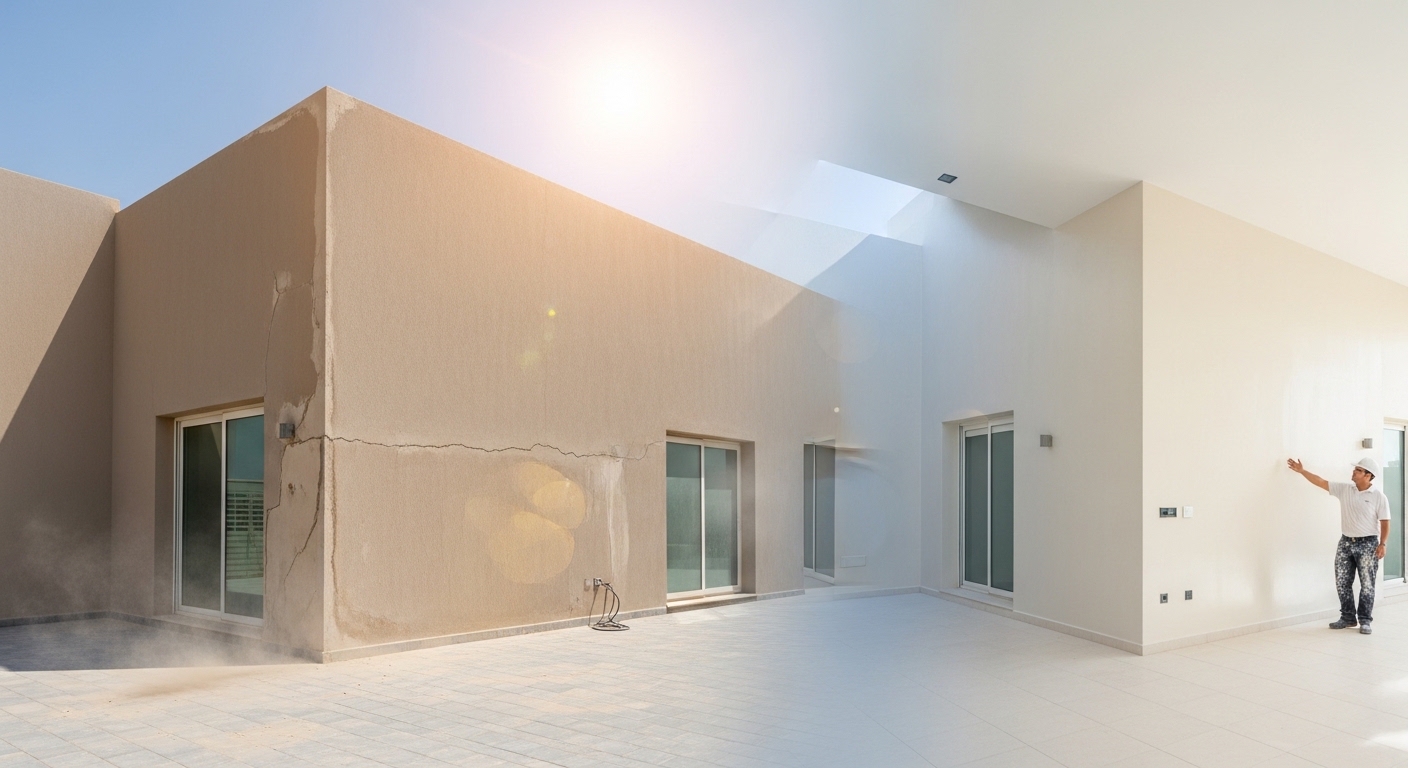
What it looks like: When you run your hand along the exterior wall, a fine white or grey powder comes off on your fingers. The wall surface looks dull and may have a slightly bleached appearance compared to its original color.
Why it happens in Dubai: Chalking is the result of UV radiation breaking down the paint binders the chemical compounds that hold the paint together and bond it to the wall. In Dubai’s intense sunshine, this process accelerates significantly compared to cooler climates. It is most pronounced on south and west-facing walls that receive the most direct sun.
Severity: Moderate. Chalking is not immediately dangerous to the wall structure but it signals that the protective paint layer is breaking down. Once chalking begins, the rate of deterioration accelerates the less binder remaining, the faster UV breaks down what is left.
What happens if ignored: A chalking surface that is repainted without proper preparation which includes washing off the chalky residue completely will cause the new paint to adhere to the loose chalk rather than the wall. This leads to rapid peeling of the new coat, wasting the entire repainting investment.
Action: Schedule exterior repainting within six months. Ensure your contractor washes and prepares the chalked surface thoroughly before applying new paint. A consolidating primer designed for chalked surfaces is worth using before the topcoat.
Sign 7 Efflorescence: White Salt Deposits on Exterior Walls
What it looks like: White, crystalline deposits on the exterior wall surface, usually appearing near the base of walls, around window sills, or at mortar joints between blocks. It looks like white staining or a powdery white crust on the wall.
Why it happens in Dubai: Efflorescence is caused by water moving through the concrete or masonry wall, carrying dissolved salts with it. As the water evaporates at the surface, the salts are left behind as visible deposits. In Dubai, two conditions accelerate this: first, the concrete and block used in UAE construction has a naturally higher salt content than in many other countries. Second, irrigation water used in gardens and landscape areas around villas often has high mineral content that can enter wall bases through soil contact.
Severity: Urgent. Efflorescence itself is not structurally dangerous in early stages but it is a confirmed indicator that water is moving through your wall. That moisture movement is the real problem and will cause increasingly serious damage if the pathway is not sealed.
What happens if ignored: Persistent moisture movement through exterior walls eventually saturates the plaster, causes paint failure across increasingly large areas, and in severe cases degrades the mortar between blocks, leading to masonry repair costs of AED 2,500 to AED 9,000 or more.
Action: Efflorescence must be treated before repainting not covered over. The deposits need to be wire-brushed off, the wall dried completely, the moisture source identified and addressed, and a waterproofing primer applied before any topcoat. Painting over efflorescence causes the new paint to fail within months.
Sign 8 Tide Marks and Rising Damp at Ground Level
What it looks like: A horizontal tide-line mark on exterior walls near ground level, usually within the first half metre above the ground. The wall below the line looks damp, darker, or discoloured even when it has not rained. The paint in this zone may be peeling or blistering specifically near the base.
Why it happens in Dubai: Rising damp occurs when groundwater moves upward through the wall structure by capillary action. In Dubai, this is most commonly associated with villas and ground-floor properties where garden irrigation is frequent, drainage is poor, or the original waterproof damp-proof course in the wall base has failed. Some older UAE villa construction from the 1990s and early 2000s did not include adequate damp-proof courses by modern standards.
Severity: Critical. Rising damp does not resolve on its own and cannot be fixed by painting alone. It is a structural moisture problem that requires specialist treatment.
What happens if ignored: Persistent rising damp saturates the lower wall structure, causes progressive plaster failure, corrodes any steel reinforcement within the wall, and in severe cases destabilises the wall base. Remediation costs for rising damp in a Dubai villa, including injection of a chemical damp-proof course, replastering, and repainting of affected areas, typically range from AED 5,000 to AED 20,000 depending on the extent and property size.
Action: Do not repaint ground-level walls showing tide marks without a specialist damp assessment. A rising damp specialist can inject a chemical damp-proof course into the affected wall base. Only after successful treatment and full drying which can take several months should repainting proceed.
Sign 9 Paint Peeling in Patches
What it looks like: Areas where paint has lifted away from the wall surface, leaving exposed plaster or substrate beneath. The edges of the peeled area are typically curled or ragged. It may start at edges, corners, or around fixtures.
Why it happens in Dubai: Three main causes in the Dubai context. First, poor surface preparation on the previous paint job if the wall was not properly cleaned before painting, the paint bonded to dust rather than the wall and will eventually lift. Second, wrong paint type for the surface standard exterior paint on a surface that experiences significant moisture. Third, paint applied in extreme heat in Dubai summer, paint applied to a very hot surface can skin over quickly while remaining wet underneath, creating a weak bond that fails within a year.
Severity: Urgent. Peeling paint exposes the underlying wall to direct weather contact. In Dubai’s dusty and occasionally wet environment, an unprotected exterior wall absorbs damage quickly.
Action: Peeling must be addressed promptly. A professional team will remove all loose paint back to a stable edge, prepare the surface properly, apply primer, and repaint. Simply painting over peeling paint creates a new layer that will peel even faster because the unstable layer beneath it has not been removed.
How to Do a Proper Self-Inspection of Your Dubai Home
You do not need to be a professional to carry out a meaningful inspection of your walls. Here is a practical process for assessing your own property:
- Do the inspection in good lighting take a torch and hold it at a shallow angle along wall surfaces to reveal texture problems, cracks, and uneven areas that are invisible under normal room lighting
- Run your hand along exterior walls to check for chalking if powder comes off on your palm, the paint is breaking down
- Check all bathroom and kitchen walls carefully at the joins where wall meets ceiling and where wall meets floor these are the highest-risk areas for moisture and bubbling
- Inspect ground-level exterior walls at the base look for the tide-line pattern that indicates rising damp and any white crystalline deposits that signal efflorescence
- Check all corners where two walls meet, all ceiling lines, and all areas around door and window frames these are where cracks appear first
- Smell rooms that are closed or rarely used a persistent musty smell in a room that should not have moisture is a warning sign worth investigating
- Photograph anything that concerns you a photo taken today and compared to a photo from six months ago tells you whether a crack or damp patch is growing
When to Call a Professional vs Handle It Yourself
Not every sign requires a professional assessment before repainting. Here is a clear guide on when you can proceed with a standard repaint and when you need specialist input first:
- Proceed with repaint fading color, chalking, outdated appearance, paint color transferring to touch, minor scuffs and stains these are cosmetic and a quality repaint is the appropriate response
- Repaint after basic repairs hairline cracks, minor peeling in isolated areas, rough or gritty surface these need proper preparation and filling before repainting but do not require specialist assessment
- Get specialist assessment first damp patches, musty smell, bubbling in multiple rooms, efflorescence, tide marks near ground level, mold, cracks wider than two millimetres or growing visibly do not repaint over these until the underlying cause is identified and treated
- Structural specialist required wide cracks especially diagonal ones, significant wall movement, tide marks with softened plaster, any crack that has appeared suddenly after impact or ground movement these need structural engineering assessment before any surface work
Frequently Asked Questions
How do I know if my wall crack is cosmetic or structural?
The two most reliable indicators are crack width and direction. Hairline cracks under one millimetre wide running along ceiling-wall joins or along mortar joints are almost always cosmetic caused by thermal movement or building settlement. Cracks wider than two millimetres, cracks that are diagonal especially at 45-degree angles from corners, and cracks that have appeared suddenly without an obvious cause like a paint job or nearby impact are more concerning and warrant a structural assessment. Any crack you can feel a step or offset across where one side of the crack sits higher than the other should be assessed professionally.
Is bubbling paint in my Dubai bathroom a mold risk?
It depends on what is underneath. Bubbling caused by steam from showering and the wrong paint type standard emulsion instead of moisture-resistant is a paint failure issue rather than an immediate mold risk. Bubbling caused by moisture entering from outside the wall or from a plumbing leak carries a higher mold risk because the moisture source is persistent. To distinguish them, check whether the bubbling is isolated to steam-exposed areas near the shower, or whether it appears on walls that are not directly exposed to steam. The latter suggests external moisture and carries higher risk.
What is the white powdery substance on my exterior wall?
It is most likely either chalking or efflorescence two different problems that look somewhat similar but have different causes and different levels of urgency. Chalking is a fine powder that comes off when you rub the wall and results from UV breakdown of the paint. Efflorescence is a harder, crystalline deposit often whiter and more defined that appears in specific locations like wall bases, window sills, and mortar joints. Chalking is a paint issue. Efflorescence is a moisture-through-masonry issue that needs specialist treatment before repainting.
My walls smell musty but look fine. Should I repaint?
No not without investigating the smell first. A musty smell in the absence of visible marks almost always means moisture is present somewhere that is not yet visible from the surface. Repainting at this stage would cover the symptom while the underlying moisture continues causing damage. Use a moisture meter on the walls in the affected area if readings are elevated, identify the moisture source before any surface work begins.
Can I paint over mold in my Dubai apartment?
You should not, and doing so will cost you significantly more in the medium term. Paint applied over active mold even mold-resistant paint will be undermined by the mold growing beneath it within months. The mold must be killed with a specialist biocidal treatment, the dead mold removed, the wall allowed to dry fully, and an anti-mold primer applied before any topcoat. Shortcuts here always result in the mold returning faster and more extensively.
How often should I inspect my Dubai home’s walls?
A full inspection of both interior and exterior walls twice a year is the recommended practice once in October when summer ends and once in April before the intense heat season begins. The October inspection is most important for exteriors because it catches any deterioration that occurred during the summer heat cycle. The April inspection gives you time to schedule any repairs or repainting during the optimal October-to-March painting window before another summer arrives.
Final Thoughts
The walls of your Dubai home communicate clearly once you know what to look for. Most signs of paint deterioration start small a faint damp mark, a hairline crack, a slightly rough surface and become serious only when they are ignored for months or years. The cost difference between catching a sign early and addressing it properly versus discovering the damage it has caused after the fact is consistently significant.
Use the severity ratings in this guide to prioritise what needs attention now versus what can be scheduled. Use the action steps to know whether you need a professional assessment before repainting or whether a quality paint job with proper preparation is the appropriate response. And use the inspection checklist twice a year to make sure nothing is developing unnoticed.
A Dubai home that is inspected regularly, where small signs are acted on promptly, and where repainting is treated as protective maintenance rather than a cosmetic afterthought, will consistently cost its owner less in repairs and last significantly longer between major interventions than one where problems are left to develop until they become unavoidable.