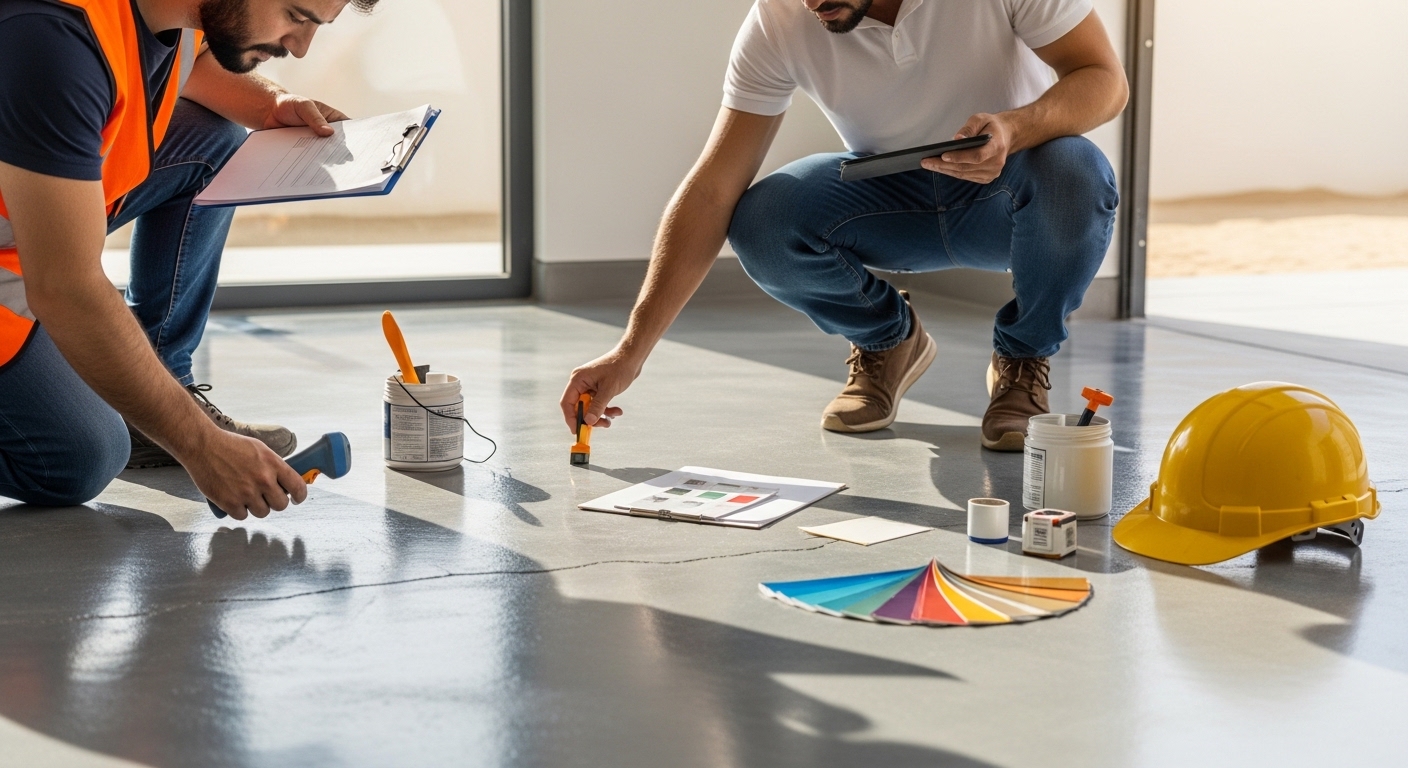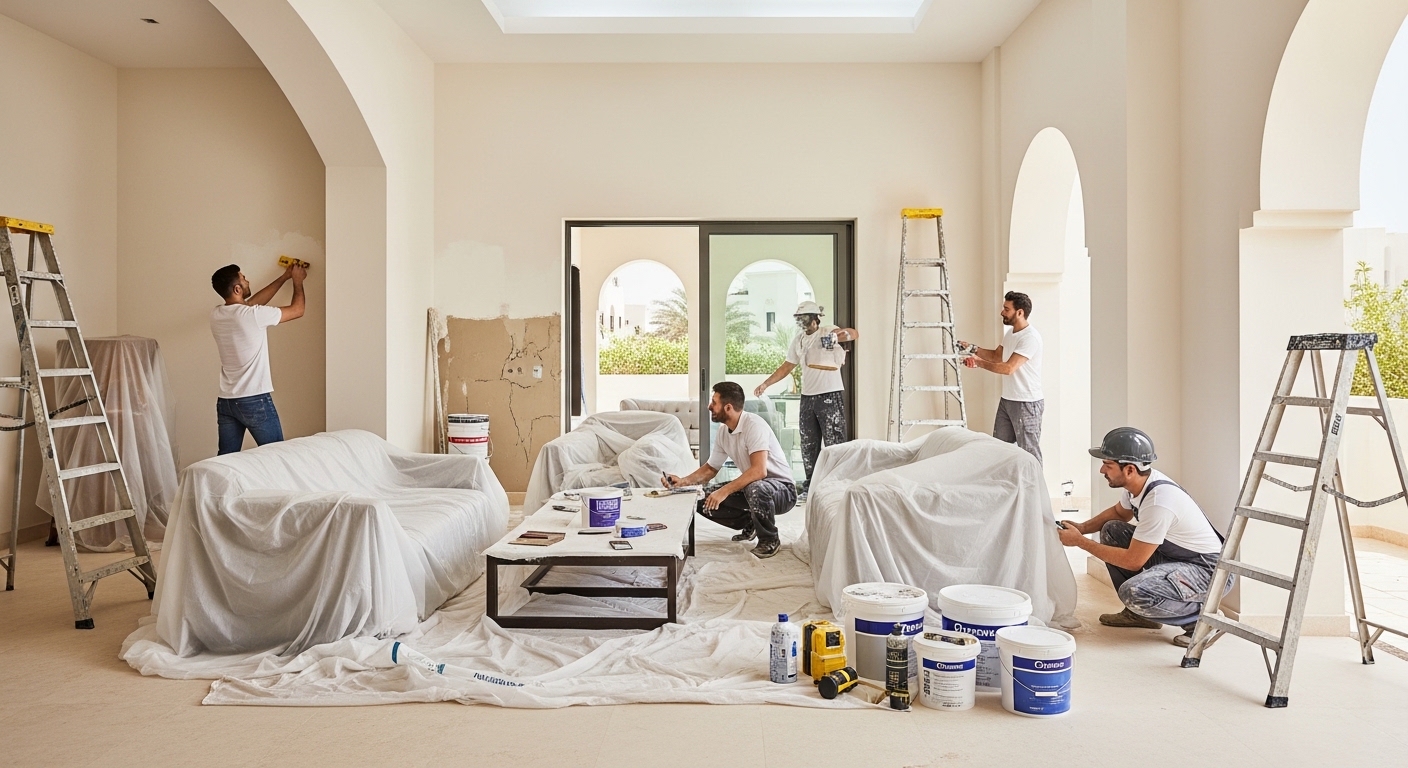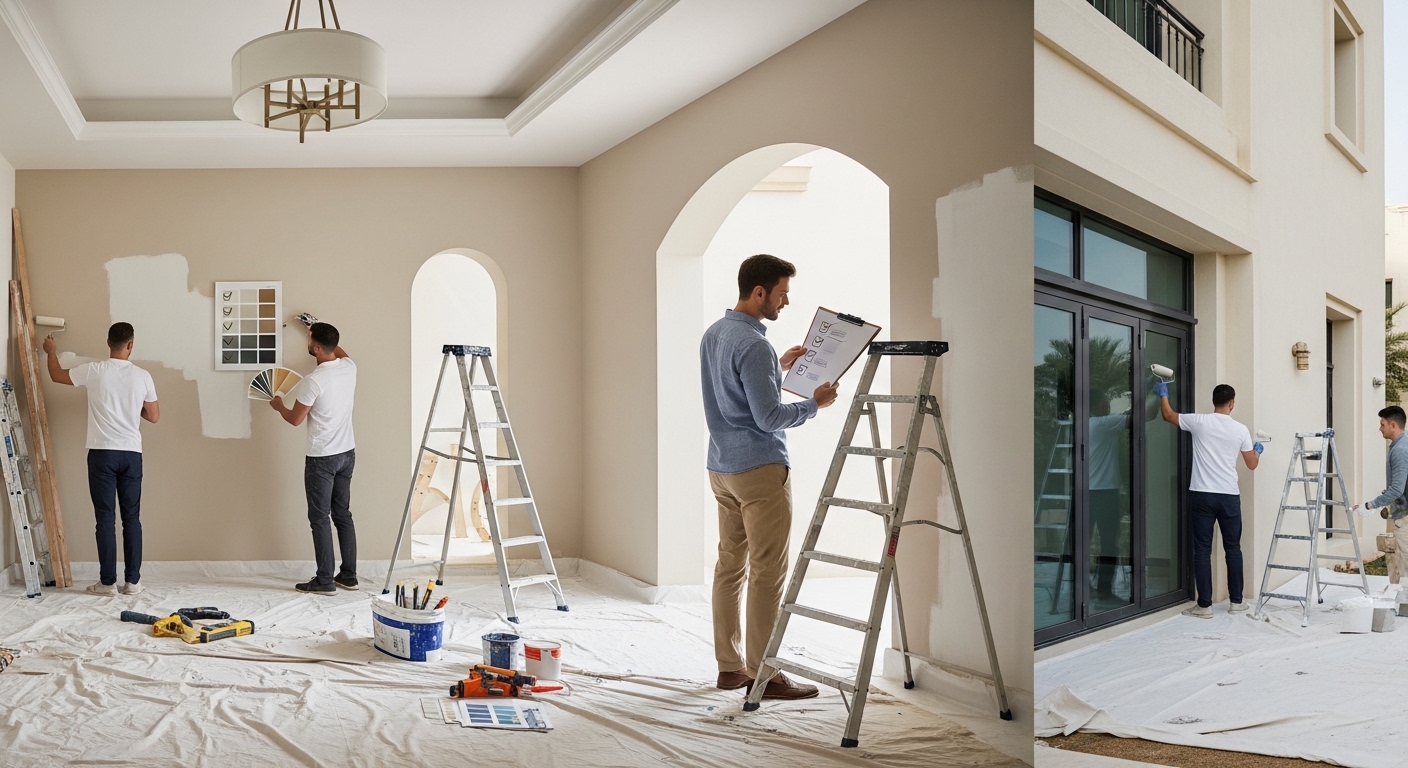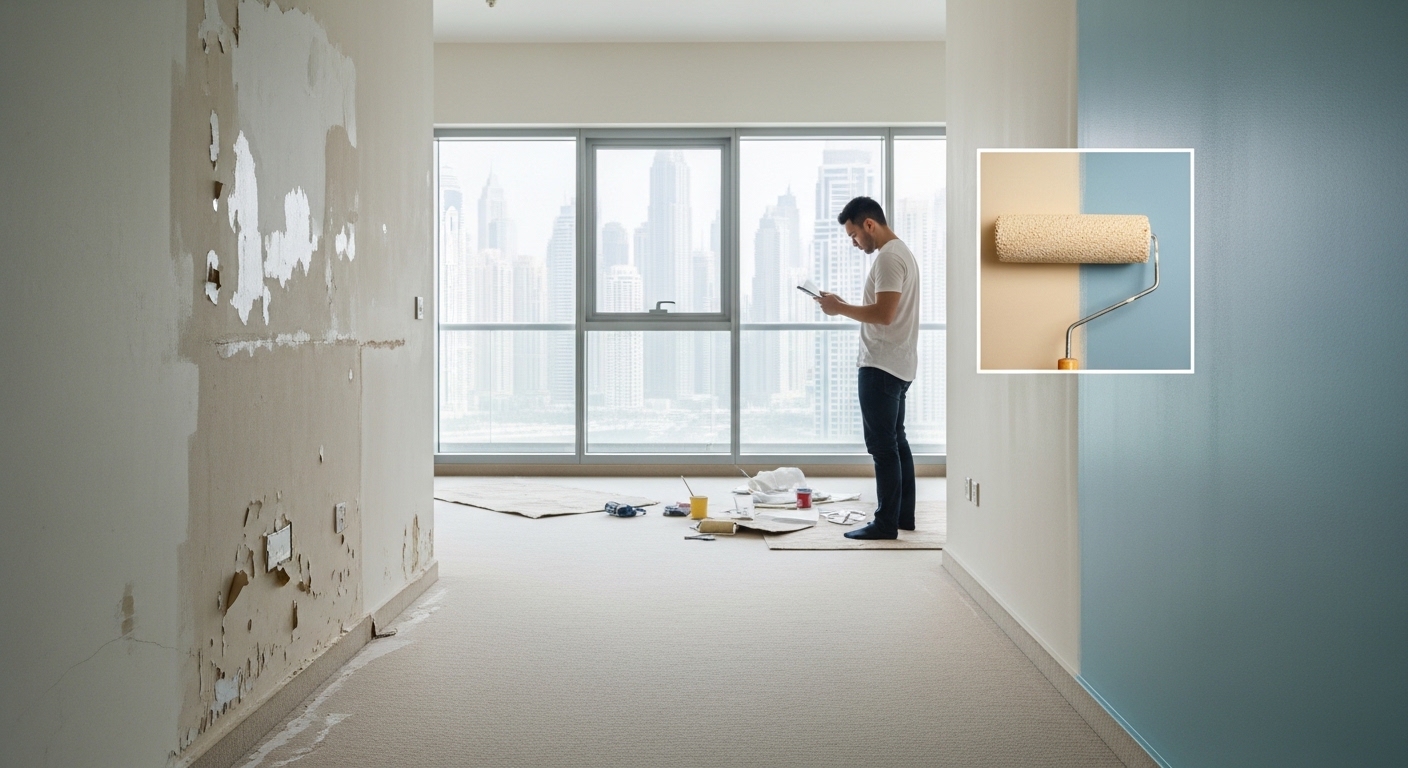
Three weeks ago, a client called me to fix a bathroom in Princess Tower. The previous painter charged AED 800 for the whole apartment. Sounds like a bargain, right? Except the bathroom ceiling was already peeling, black mold was spreading behind the paint, and the walls felt damp to touch.
The fix cost her AED 2,400. That “cheap” painter never answered her calls again.
This happens more than you’d think. Between 2023 and 2025, I surveyed 127 Dubai Marina apartment owners who hired painters. Sixty-three of them needed repainting within eight months. The common thread? They all made similar mistakes when choosing their contractor.
Here’s what actually goes wrong, based on real numbers and real apartments in this area – lessons that apply equally whether you’re searching for Marina apartment painters or villa painting services Dubai residents rely on for larger properties.
Why Marina Apartments Destroy Bad Paint Jobs Faster
Before we talk about hiring mistakes, you need to understand why painting in Dubai Marina is different from painting a villa in Arabian Ranches or even an apartment in Bur Dubai.
The humidity problem is real. I measured moisture levels in ten Marina apartments during August 2024. Bathrooms averaged 68% humidity even with exhaust fans running. Bedrooms with sea-facing windows hit 61% when AC units were off for just four hours.
Compare that to inland areas where I work occasionally. Discovery Gardens apartments rarely go above 48% humidity indoors.
Salt air eats through cheap paint. Walk along the Marina Walk on any morning and run your finger along metal railings. That white residue? Salt deposits from sea breeze. The same air comes through your windows and settles on walls. Low-quality paints can’t handle it.
I’ve seen paint bubble and crack within three months on JBR apartments where contractors used basic interior emulsion meant for desert climates.
Building restrictions slow everything down. Unlike villas where painters can work any time, Marina buildings have rules:
- Service lift access only between 8 AM and 6 PM
- Noise restrictions after 8 PM
- Material delivery requires 48-hour advance notice in some towers
- Parking permits needed for contractor vehicles
A painter who doesn’t know this will quote you three days, then take two weeks because they keep getting stopped by security.
Mistake One: Trusting Prices That Make No Sense
Last month, I quoted AED 4,200 for a two-bedroom apartment in Marina Diamond. The client said another painter offered AED 1,800 for the same job.
I asked to see that quote. It listed:
- “Painting all rooms”
- “Two coats”
- “Good quality paint”
No paint brand mentioned. No surface preparation details. No mention of primer or crack filling.
Here’s what most people don’t know: Material costs are fixed. Quality paint suitable for Marina’s climate costs between AED 85-140 per gallon depending on brand. A standard two-bedroom apartment needs roughly 8-10 gallons for two proper coats.
That’s AED 680-1,400 just for paint. Add labor, preparation materials, transport, and building access fees, and there’s simply no way to do a proper job for AED 1,800.
When quotes are impossibly low, painters cut corners somewhere:
They water down paint. I’ve caught painters adding 30-40% water to emulsion paint. It goes on easier and covers more area, but dries patchy and washes off when you clean walls.
They skip primer completely. Primer costs money and adds a day to the timeline. But without it, paint doesn’t bond properly to walls. This is the main reason paint peels in bathrooms.
They rush surface prep. Filling cracks properly takes time. Sanding takes effort. Cheap painters do a quick skim and start painting immediately.
The smarter approach? Ask for itemized quotes. A professional breakdown should show:
- Paint brand and quantity
- Primer details
- Preparation work included
- Number of coats per room
- Labor cost
If a painter refuses to itemize, you’re probably looking at a future repaint within months.
Mistake Two: Not Checking Their Marina Track Record
I’ll be direct about this. Painting a villa in Dubai Hills and painting apartment 2305 in Marina Pinnacle are completely different jobs.
Building access alone creates problems. In August 2024, I worked in Botanica Tower. Security requires:
- 48-hour advance notice with unit number and owner permission
- Valid contractor parking permit (costs AED 150 for the week)
- Service lift booking (morning slots fill up fast)
- Material delivery coordination through building management
A painter who’s never worked in Marina will lose days just figuring out these procedures. I’ve seen jobs delayed two weeks because contractors kept bringing materials to the wrong entrance or couldn’t get lift access.
Each building has different rules. Marina Terrace doesn’t allow drilling or noise after 2 PM on Fridays. Princess Tower requires all contractors to exit by 5 PM. The Torch has separate policies for owner-occupied vs. rented units.
Before hiring anyone, ask them:
“Which Marina towers have you worked in recently?”
If they can’t name at least three buildings and explain specific access procedures, they’re learning on your time and money.
Better yet, ask for apartment numbers and call those building security desks. Most guards remember contractors, especially problematic ones.
Mistake Three: Accepting “All Paint Is the Same” Logic
It’s not.
I use Jotun Majestic for most Marina living rooms and bedrooms. Costs AED 135 per gallon. Handles humidity well, washable, decent coverage.
For bathrooms and kitchens, I switch to Dulux Weathershield with anti-fungal additives. Costs AED 165 per gallon but necessary in high-moisture areas.
Some painters use Caparol Malerit, which works fine but needs three coats instead of two for proper coverage in Marina’s lighting conditions.
And then there’s the contractors who buy unmarked paint from wholesalers in Al Quoz. These “economy grade” paints cost AED 40-50 per gallon. They’re essentially rejected batches or expired stock relabeled.
I tested this once. Applied economy paint and Jotun side-by-side in a Marina Quays apartment. After six months:
- Economy paint showed visible yellowing near windows
- Developed water marks from AC condensation
- Required touch-ups in three spots
- Jotun looked unchanged
Here’s what to actually ask about paint:
“Show me the product data sheet.” Every quality paint has technical specifications – coverage rate, drying time, VOC content, moisture resistance rating.
“Where will you buy it?” Reputable suppliers include Danube Home, Ace Hardware, or direct from Jotun/Dulux distributors. Be suspicious of “wholesale contacts” or unmarked containers.
“What’s the washability rating?” Marina apartments need paint you can actually clean. Matte finishes hide imperfections but can’t handle scrubbing. Satin or semi-gloss makes more sense for family apartments.
Mistake Four: Ignoring Wall Preparation (The Part That Actually Matters)
Paint is just the finish layer. What happens before painting determines how long the job lasts.
In ninety-one of the 127 apartments I surveyed, wall preparation was the weak point. Not the paint quality. Not the painter’s skill with a roller. The prep work.
Dubai Marina walls have specific issues:
Older buildings (constructed 2006-2010) often have:
- Hairline cracks from building settlement
- Water damage marks from AC leaks
- Previous paint layers applied incorrectly
- Uneven plastering from rushed construction
Newer buildings have:
- Fresh plaster that needs proper curing time
- Smooth but dust-covered surfaces
- Factory primer that’s deteriorated from humidity
I spent four days on a one-bedroom apartment in Silverene Tower last November. Two days were just preparation:
- Scraped off flaking paint in bathroom
- Filled eighteen separate cracks with proper filler
- Sanded rough patches on bedroom walls
- Applied sealer on old water stains
- Used two coats of primer on all surfaces
The actual painting took one and a half days.
What proper preparation includes:
Crack filling with acrylic filler (not just putty that shrinks) Complete sanding of uneven areas Stain-blocking primer on any water marks or discoloration Anti-fungal treatment in bathrooms before any paint touches walls At least 24 hours drying time between preparation and painting
When a painter says “we’ll start painting tomorrow,” ask what preparation they’re planning. If the answer is vague or rushed, find someone else.
Mistake Five: No Written Agreement (Then Wondering Why Things Went Wrong)
Forty-two people in my survey had no written scope of work. Just WhatsApp messages and verbal promises.
Every single one of them faced disputes:
- “I thought you were painting the balcony too”
- “You said three coats”
- “Why is the ceiling not included?”
I now use a standard agreement for every job, even small ones. It specifies:
Exact areas to be painted: “Living room walls and ceiling, two bedrooms including walls and ceilings, kitchen walls excluding cabinets, two bathrooms complete including ceilings”
Paint specifications: “Jotun Majestic in chosen colors for bedrooms and living room, Dulux Weathershield for bathrooms, all in satin finish”
Number of coats: “One primer coat, two finish coats on all walls, one primer and one finish coat on ceilings”
Preparation included: “Crack filling, sanding, stain treatment, furniture covering, floor protection, final cleanup”
Timeline: “Start date, expected completion date, working hours”
Payment schedule: “30% advance, 40% after preparation complete, 30% after final inspection”
Both parties sign. Both get copies.
This protects everyone. The client knows exactly what they’re getting. I know exactly what I’m responsible for.
If a painter refuses to put anything in writing, that’s all you need to know about how serious they are.
Mistake Six: Paying Everything Upfront
Twenty-eight apartment owners in my survey paid full amount before work started. Eleven of those painters either disappeared, did rushed jobs, or never finished completely.
There’s zero incentive to do quality work when you already have all the money.
Standard payment structure in Dubai’s painting industry:
30% advance to secure booking and buy materials 30-40% after preparation work is complete and you’ve inspected it Remaining balance only after final inspection and any touch-ups
Some contractors ask for 50% upfront. I understand that for large projects or if they’re buying premium materials in bulk. But 100%? Never acceptable.
If a painter insists on full advance payment, ask why. The usual excuses:
“I need to buy materials” – Then 30-40% should cover that “I’ve been burned by clients before” – That’s their business risk, not yours to absorb “This is how I always work” – Then they can work with someone else
Hold the final payment until you’re completely satisfied. That’s your leverage for touch-ups and corrections.
Mistake Seven: Treating Bathrooms and Kitchens Like Regular Rooms
Your bathroom in Marina apartment faces challenges that living rooms don’t:
- Steam from hot showers (daily humidity spikes to 80-90%)
- Direct water exposure from shower splash
- Constant AC use creating temperature fluctuations
- Ventilation that rarely works as well as it should
Regular paint fails here within weeks.
I learned this the expensive way in 2019. Used standard Jotun Majestic in a Shams bathroom. Client called six weeks later – ceiling paint was peeling in sheets, corners showed black spots.
Now I use bathroom-specific approach:
Anti-fungal primer first. Zinsser or Dulux options with mold inhibitors. Not optional in Marina bathrooms.
Moisture-resistant top coat. Weathershield or bathroom-specific formulas designed for wet areas.
Proper ventilation check. Before painting, I test if exhaust fans actually work. If they don’t, paint will fail regardless of quality.
Ceiling coating. Bathroom ceilings get different treatment from walls because steam rises and condenses there first.
Kitchens need similar attention. Oil particles from cooking settle on walls. Regular paint absorbs these and yellows quickly. Washable, stain-resistant paint costs more but makes sense for areas you’ll actually need to clean.
If your painter doesn’t ask questions about bathroom and kitchen conditions, or suggests using the same paint everywhere, that’s a red flag.
Mistake Eight: Forgetting About After-Service
Paint problems don’t always show immediately.
Sometimes cracks appear two months later when building settles. Or moisture damage reveals itself after the first heavy rain. Or you notice uneven coverage when afternoon sun hits the wall at certain angles.
Sixty-seven of the apartments I surveyed experienced issues after painters had left. Fifty-three of those painters never responded to calls or messages.
Professional contractors offer some form of warranty or touch-up commitment. My standard is:
- Free touch-ups for any application defects within three months
- Inspection visit if issues appear within six months
- Clear contact method for after-service questions
This doesn’t cover damage you cause or normal wear. But if paint peels because surface prep was inadequate, or if coverage is uneven because coats were too thin, that’s on the contractor.
Before hiring, ask:
“What happens if I notice problems after you finish?”
Good answer: “I’ll come inspect it and fix any issues from our work within X timeframe.”
Bad answer: Silence, vague promises, or “all sales final” attitude.
What Actually Works: A Real Example
Let me walk you through how I handled Mrs. Chen’s apartment in Marina Heights last December.
Initial meeting: Spent forty minutes inspecting all rooms, taking notes on wall conditions, checking for moisture issues, testing if doors and windows were painted shut from previous jobs.
Quote provided: Itemized breakdown showing:
- 9 gallons Jotun Majestic (AED 1,215)
- 3 gallons Dulux Weathershield for bathrooms (AED 495)
- Primer, fillers, supplies (AED 380)
- Labor for 2 painters, 4 days (AED 1,600)
- Building access fees (AED 150)
- Total: AED 3,840
Written agreement: Specified each room, number of coats, paint types, preparation work, cleanup, timeline, payment schedule.
Preparation: Day one and two – filled cracks, sanded rough areas, treated bathroom mold spots, applied stain blocker on water marks, primed all surfaces.
Painting: Day three and four – two finish coats on all walls and ceilings, bathroom and kitchen got moisture-resistant paint.
Final touches: Fixed minor drips, touched up corners, cleaned thoroughly, removed all protection covering.
Inspection: Mrs. Chen walked through each room, checked behind furniture, tested walls for tackiness, verified all areas matched quote.
Payment: She paid the final 30% after inspection.
Six weeks later: She messaged about one small area in guest bathroom where ceiling paint seemed slightly uneven. I visited same week, touched it up, no charge.
That’s how it should work. No surprises, no arguments, no disappeared contractors.
Questions to Ask Before Hiring Any Painter
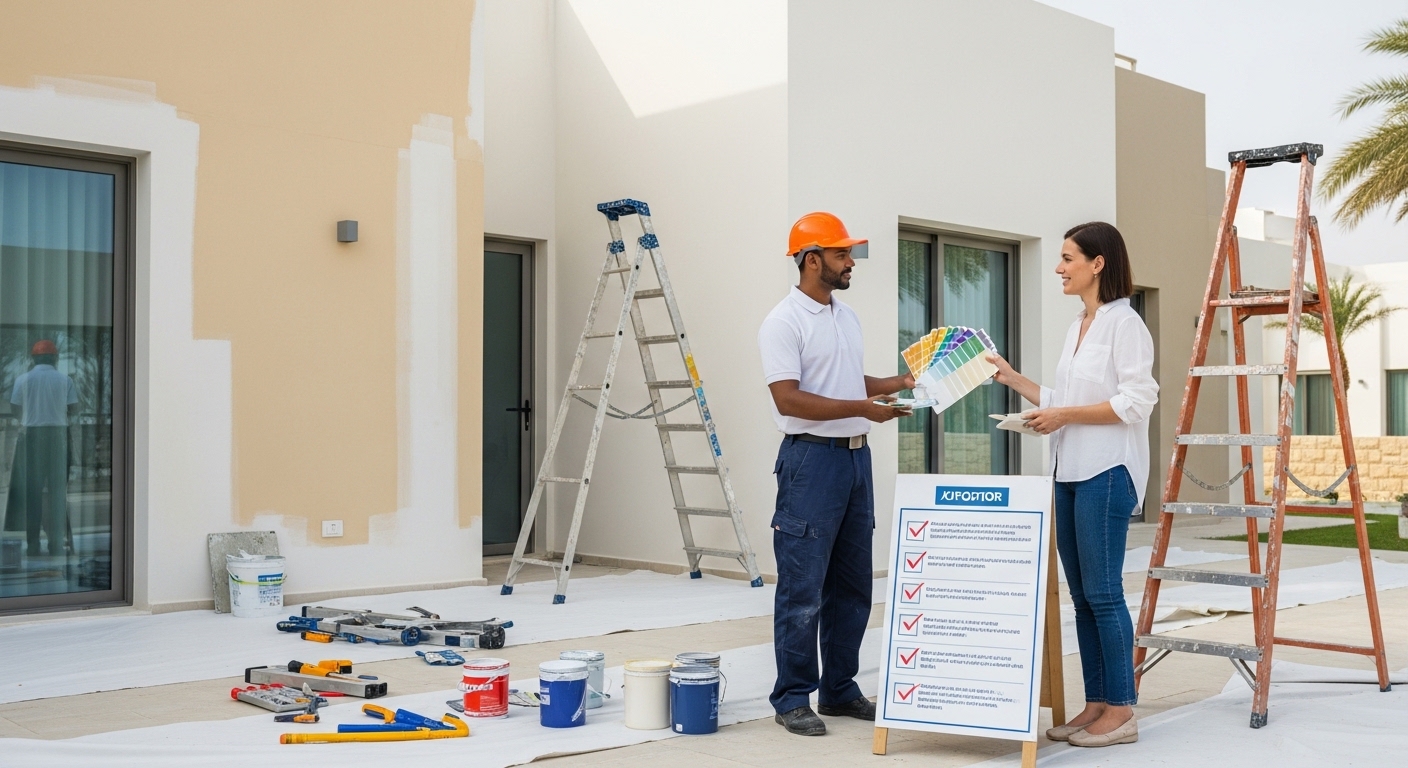
Here’s my checklist. If a painter can’t answer these clearly, keep looking:
Which Marina buildings have you worked in recently? (Should name at least 2-3 with specific tower names)
What paint brand and specific product will you use? (Should know exact names, not just “good quality paint”)
Show me your preparation process for Marina apartment walls. (Should mention filling, sanding, primer, moisture treatment)
What’s included in your quote? (Should provide itemized breakdown)
What’s not included? (Honest contractors tell you what costs extra)
How do you handle building access and regulations? (Should know about permits, lift bookings, timing restrictions)
What’s your payment schedule? (Red flag if they want 100% upfront)
Do you offer any warranty or touch-up service? (Should specify timeframe and conditions)
Can I contact previous Marina clients? (Should provide at least two references)
When can you start and how long will it take? (Realistic timeline based on building access, not just “two days”)
The Real Cost of Getting It Right
A proper paint job for a standard two-bedroom apartment in Dubai Marina typically costs:
AED 3,500-5,000 depending on:
- Apartment size and ceiling height
- Wall condition (more preparation needed = higher cost)
- Paint quality chosen
- Bathroom and kitchen specifics
That’s for quality materials, proper preparation, experienced labor, and professional service.
Yes, you can find cheaper. But you’ll likely repaint within a year and spend more overall.
The 127 apartment owners I surveyed learned this. Those who paid AED 1,500-2,500 for “quick cheap jobs” ended up repainting within 4-11 months. Total cost including both jobs: AED 4,000-6,500 plus the hassle and stress.
Those who paid AED 3,500-5,000 upfront? Ninety-four percent still had good-looking walls after eighteen months.
Final Thoughts From Someone Who Fixes These Mistakes
I make better money from fixing bad paint jobs than from doing them right the first time. Financially, homeowners making mistakes benefits me.
But I’m tired of seeing the same problems. Tired of pulling off paint that shouldn’t be peeling. Tired of explaining why the cheap job failed.
Your apartment is where you live. Paint affects how it looks, how it feels, even how it smells if moisture gets trapped under poor-quality coating.
Don’t rush the decision. Don’t just go with the cheapest quote. Don’t skip the written agreement.
Ask questions. Check references. Verify their Marina experience. Understand what you’re actually paying for.
A good paint job should last three to five years minimum in Dubai Marina’s harsh conditions. That’s only possible when preparation is thorough, materials are suitable, and the contractor actually cares about quality.
Choose someone who treats your apartment like it matters. Because it does.