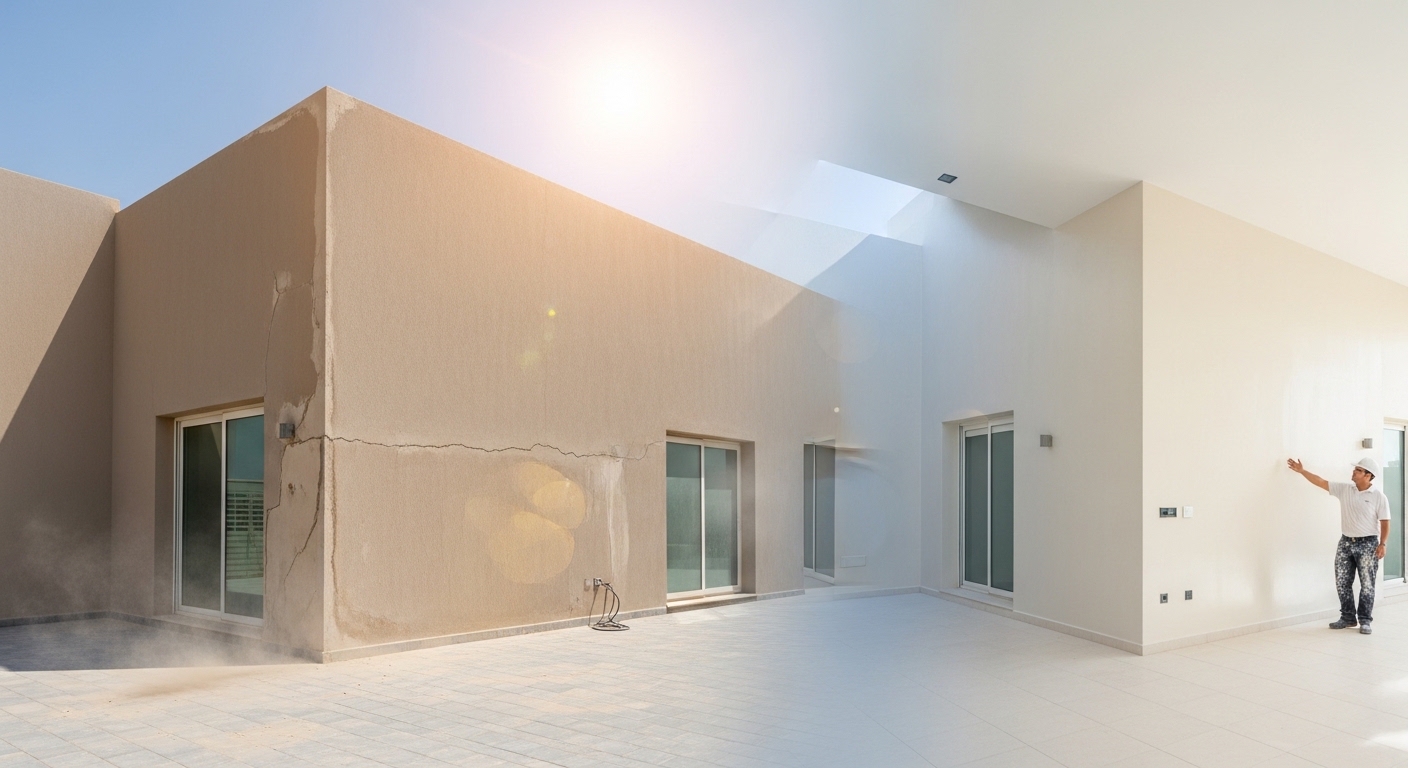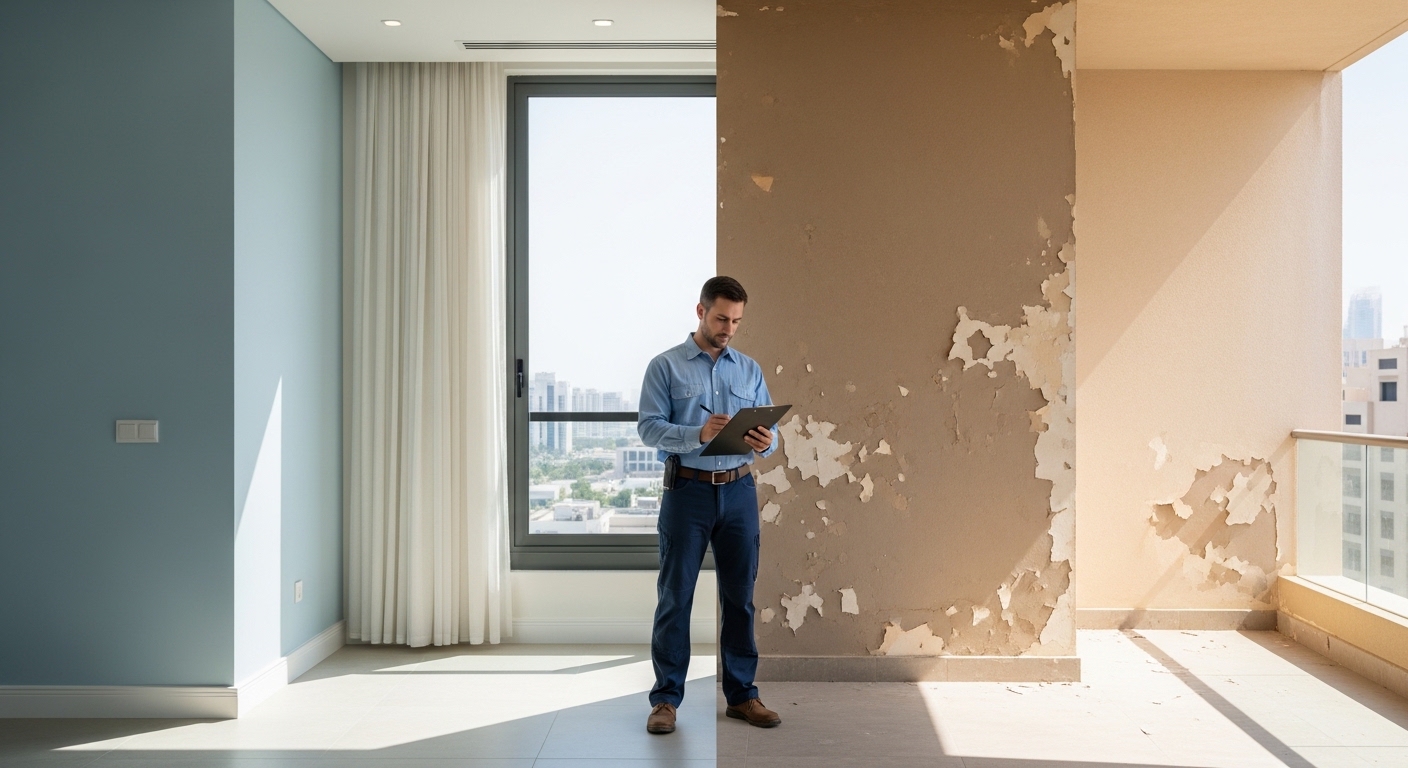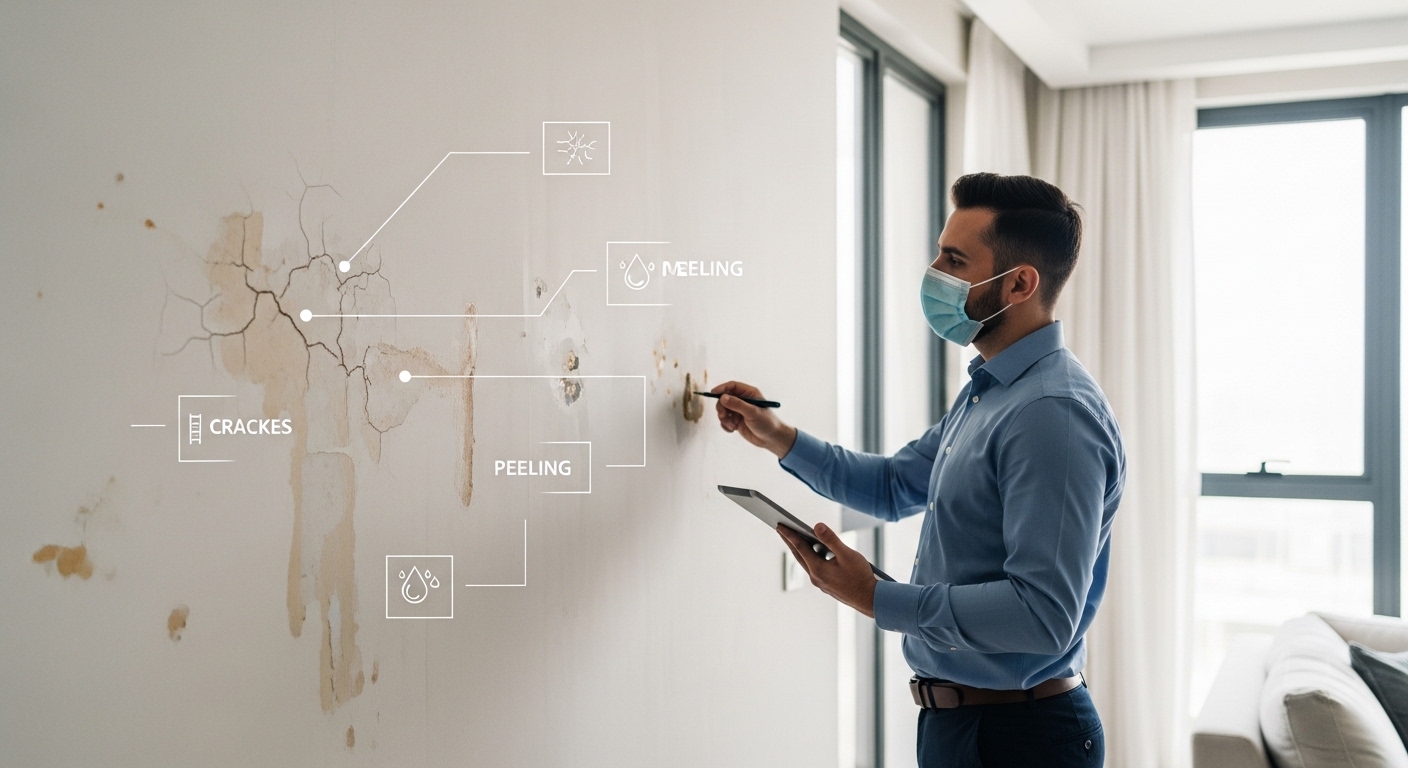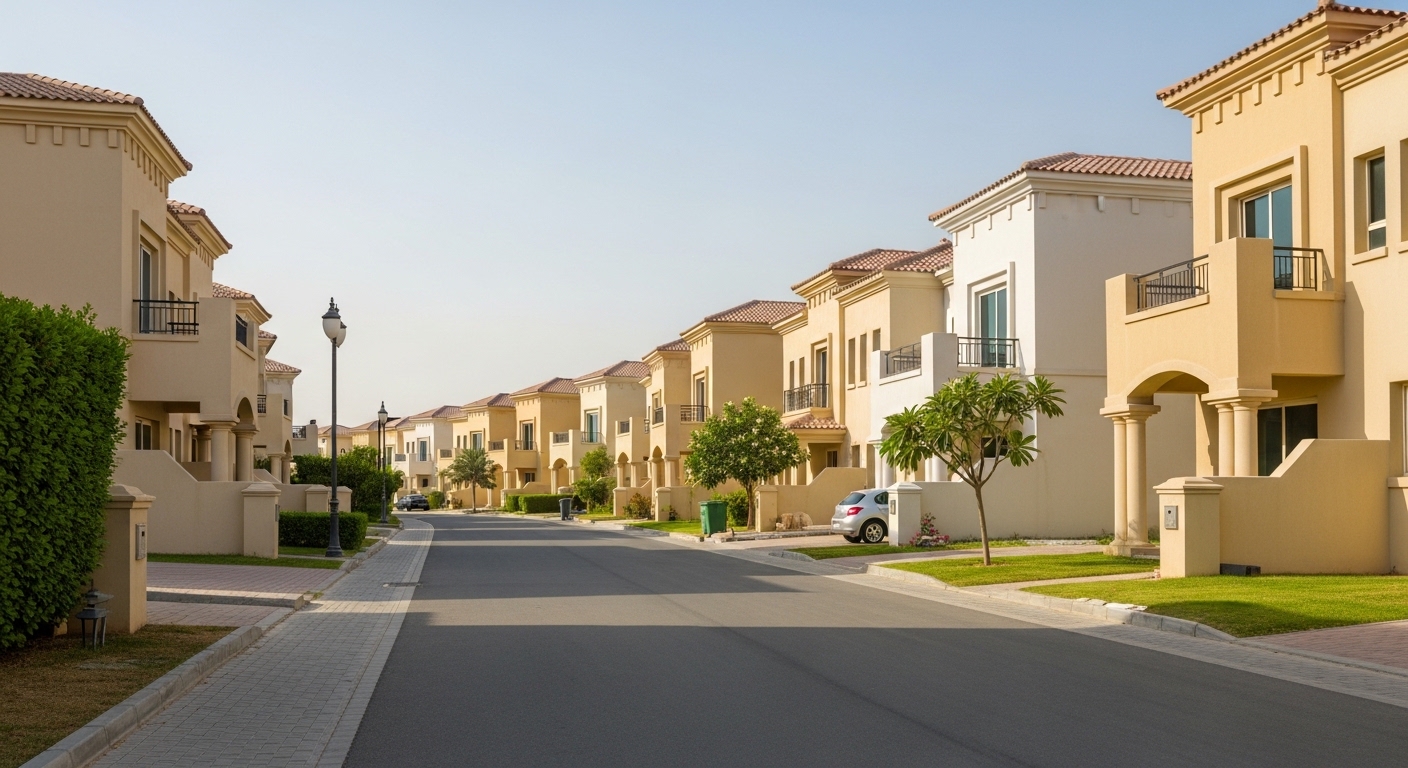
Walk through almost any established Dubai villa community Arabian Ranches, Jumeirah Park, Victory Heights, The Springs and you will find the same story on a number of properties. Paint that looked clean two or three years ago has started to chalk, crack at the joints, or peel around windows and columns. The homeowners did not use bad paint. In many cases, they used a respected brand. What they used was the wrong approach for a building type and a climate that demands something very specific.
This article is not about painting in general. It is about what makes villa painting different from apartment or commercial painting and why those differences matter enough to change how you plan, budget, and choose a contractor for any paint work on your property.
Villas Have Multiple Surface Types Each One Needs a Different System
This is the most underappreciated challenge in villa painting, and it is the one that separates experienced villa painters from generalists. A typical Dubai villa is not one surface — it is five or six different surfaces, each with its own material properties, each requiring its own primer and paint system.
On a standard villa in a community like Mirdif or Mudon, a painting team might encounter all of the following in a single project:
- Concrete block exterior walls — the main structural walls
- Gypsum board partitions — used for most internal walls and ceilings
- Wooden fascia boards, pergola beams, window frames, and door surrounds
- Aluminium gates, railings, and entrance canopies
- Natural stone or sandstone cladding on feature walls or columns
- Sand-and-cement render on boundary walls and garden structures
Each of these surfaces absorbs paint differently, expands and contracts at different rates in Dubai’s heat, and fails in a different way if the wrong primer or topcoat is used. Applying interior emulsion to an aluminium gate, for example, is not just a cosmetic mistake — the paint will blister and peel within weeks because aluminium needs a self-etching primer to create mechanical adhesion. Painting a sandstone column with a standard masonry primer traps moisture inside the stone and causes the face to spall.
The table below summarises the correct system for each surface type commonly found in Dubai villas:
| Surface Type | Recommended System | Preparation Required | Typical Location |
| Concrete block walls | Alkali-resistant primer + 2 coats elastomeric | Wire brush, fill, sand | Exterior walls, boundary walls |
| Gypsum / drywall | PVA sealer + 2 coats low-sheen emulsion | Light sand, spot fill only | Internal partitions, ceilings |
| Wood cladding / fascia | Oil-based wood primer + exterior gloss or satin | Sand grain, clean knots, seal resin | Pergolas, window frames, doors |
| Aluminium / metal | Etch primer (self-etching) + enamel topcoat | Degrease, abrade lightly | Gates, railings, AC brackets |
| Natural stone / sandstone | Breathable masonry primer only | Brush clean — no sanding | Feature walls, column cladding |
| Render / plaster finish | Weatherproof primer + textured or smooth emulsion | Fill hairlines, sand high spots | Most villa exteriors |
| Why This Matters in Practice A generalist painter arriving with one type of primer and one topcoat cannot correctly handle a villa with five different surface types. Before any painting begins, a site inspection should identify every material present and match it to the correct preparation method and paint system. This is standard practice for a specialised villa painting service — and it is routinely skipped by lower-cost contractors. |
Dubai’s Climate Affects Villas Differently Depending on Where They Are
It is tempting to think of Dubai as one climate, but for the purposes of exterior painting, location within the city makes a genuine difference. A villa on the Palm Jumeirah faces a completely different set of challenges than one in Dubai Hills Estate or Dubailand — and the paint specification should reflect that.
Coastal communities: Palm Jumeirah, Jumeirah Beach Residence, Dubai Marina
Salt-laden air in coastal zones is corrosive. It attacks metal fixings, accelerates paint breakdown at window reveals and cornices, and promotes the growth of algae on north-facing walls that receive limited sun. Exterior paints used in these locations need anti-carbonation properties and, for any metal elements, a corrosion-inhibiting primer. Standard exterior emulsions used inland are not adequate here. We have seen villas on the Palm that needed a full exterior repaint within three years because the original specification did not account for the marine environment.
Inland desert communities: Arabian Ranches, Mudon, DAMAC Hills
The primary threat here is abrasion and thermal shock. Sand particles carried by shamal winds act as a mild sandblaster on exterior walls over time. Temperature swings between summer daytime highs of 46°C and winter night lows of 12°C stress the paint film through repeated expansion and contraction. An elastomeric coating — one with enough flexibility to move with the wall — handles this better than a standard emulsion, which will crack along plaster joints within two to three years in these conditions.
High-rise villa communities and elevated plots: Emirates Hills, Al Barari
Elevated plots receive more direct wind exposure and more sustained UV than low-lying properties. South and west-facing walls in these locations can degrade 30–40% faster than equivalent walls on sheltered, lower plots. Premium UV-stabilised coatings like Jotun Jotashield Extreme are worth the additional cost here — the extended repaint cycle justifies the upfront investment.
Dubai Community Painting Regulations: What You Need to Know
This is the section that most painting guides skip entirely, and it is one of the most practically useful things a Dubai villa owner can know. Many communities in Dubai have strict rules about exterior colours, finishes, and even the contractors permitted to work within the development.
Developer and community master rules
Developments managed by Emaar, DAMAC, Nakheel, Meraas, and Dubai Properties typically have a Community Master Plan or Design Guidelines document that specifies the permitted colour palette for exterior walls. In communities like Arabian Ranches, The Springs, and Jumeirah Islands, exterior colours must stay within an approved range of earthy tones and neutrals. Painting your villa exterior in a colour outside this range — even a subtle shift — can result in a notice from the community management office requiring you to repaint at your own expense.
Before starting any exterior repainting project, request a copy of your community’s approved colour palette from the developer or owners’ association. A reputable painting contractor familiar with Dubai developments will already know these requirements and can confirm your colour choice before any paint is purchased.
Dubai Municipality requirements
For significant exterior works on a freehold villa, Dubai Municipality may require a No Objection Certificate (NOC) from the relevant authority before work begins. This applies primarily to structural changes, but also to changes in external cladding or finish materials — for example, replacing a painted finish with stone cladding, or vice versa. A specialised contractor will advise you on whether your planned work requires approvals and can assist with the process.
RERA and strata rules for compound villas
Villas within a managed compound that falls under RERA’s strata regulations have an additional layer of oversight. The Owners Association manages common areas, but for your individual unit, exterior modifications — including repainting in a non-approved colour — typically require written approval from the OA. Keep this approval on file, as community inspectors do conduct periodic checks in many developments.
| Practical Tip If you are repainting in the same colour as the existing exterior, most communities do not require formal approval — the work is considered maintenance rather than modification. Always confirm this with your community management office before starting, and keep a record of the communication. A specialised painting contractor who works regularly in Dubai communities will have handled this process many times and can guide you through it quickly. |
Compound and Boundary Wall Challenges Specific to Villas
Apartments do not have boundary walls. They do not have detached garages, swimming pool surrounds, garden structures, or pergolas. Villas do, and these elements add significant scope and complexity to any painting project.
Boundary walls
A large villa plot in a community like The Villa or Tilal Al Ghaf can have 80–150 linear metres of boundary wall. These walls are fully exposed to the elements on both sides, receive no shade from the villa structure, and take the full force of both sun and wind. Boundary walls in Dubai fail faster than any other surface on a villa property. They need a full elastomeric exterior system, not a budget emulsion, and the preparation — cleaning, crack filling, and priming — needs to be thorough because the surface is always under stress.
Swimming pool surrounds
Pool areas present a unique combination of moisture, chlorine vapour, and intense reflected sunlight. Walls and surfaces around a pool need a moisture-tolerant exterior paint, and any painted areas inside covered pool rooms need a specialist anti-mold, anti-condensation coating. Applying a standard emulsion in a pool room leads to mold patches within one season.
Pergolas and timber structures
Wooden pergolas are one of the most commonly repainted features in Dubai villas and one of the most frequently done incorrectly. Timber in Dubai’s climate dries out intensely in summer, opens its grain, and then absorbs moisture during the humid September-October period. A film-forming paint on timber that is not properly sealed traps this moisture cycling and causes the paint to lift. The correct system is a penetrating wood primer that seals the grain, followed by a flexible exterior wood finish that can breathe. Done correctly, this lasts four to five years. Done incorrectly, it fails within one.
Metal gates and railings
Wrought iron and aluminium gates in Dubai are prone to two different failure modes. Iron corrodes if the primer coat is compromised. Aluminium does not corrode, but it develops a chalky oxide layer that prevents paint adhesion if not properly etched before priming. Both materials need surface-specific preparation — no single primer works for both. This is another reason why a villa painting team that handles only masonry is not the right choice for a full villa project.
The Real Long-Term Cost of Getting This Wrong
The financial case for using a specialised villa painting service is not complicated, but it is worth laying out clearly because it is the argument that most often gets dismissed when homeowners are comparing quotes.
Here is a direct comparison of what you are likely to spend over 10 years, depending on the quality of service you choose:
| Factor | Cheap / Non-Specialised | Specialised Service |
| Paint quality used | Standard emulsion (budget) | Premium weather-resistant (Jotun / Dulux) |
| Average lifespan per coat | 18 – 24 months | 6 – 8 years |
| Number of repaints in 10 years | 4 – 5 times | 1 – 2 times |
| Cost per repaint (medium villa) | AED 4,000 – 6,000 | AED 9,000 – 14,000 |
| Total spend over 10 years | AED 20,000 – 30,000 | AED 9,000 – 28,000 |
| Wall condition after 10 years | Repeated damage, cracks likely | Sound walls, minor touch-ups only |
The numbers in this table are based on real project costs in the Dubai market. The key insight is in the final row — wall condition after 10 years. A villa that has been repainted four or five times with budget materials over a decade will have accumulated layers of incompatible products, unresolved moisture issues that have been painted over, and structural cracks that were filled but never properly treated. At that point, a proper renovation paint job — stripping back, treating damp, repairing plaster, and repainting correctly — costs significantly more than a well-executed specialised job would have cost at the outset.
| The Hidden Cost of Skipped Preparation In 2025, our team was called to a villa in Jumeirah that had been painted three times in six years by three different budget contractors. Each contractor had simply applied a new coat over the previous failing one without addressing a slow moisture leak behind the kitchen wall. By the time we assessed the property, the plaster on a 4-metre section of exterior wall needed full removal and replacement before any painting could begin. The repair work alone cost AED 3,800 — more than the homeowner had paid for any one of the three previous painting jobs. Addressing the moisture problem at the first sign, six years earlier, would have cost AED 400. |
6. How to Identify a Genuinely Specialised Villa Painting Contractor
The word ‘specialised’ is used loosely in the Dubai painting market. Almost every contractor claims to specialise in villas. Here is how to test whether that claim is genuine:
They inspect before quoting: A contractor who quotes a price over the phone or by WhatsApp without visiting the property has not assessed the surfaces, the surface conditions, or the scope of preparation required. Any serious villa painting company insists on a site visit before producing a written quote.
They specify the product by name: A written quotation should name the exact paint product — not just a brand. ‘Jotun paint’ is not a specification. ‘Jotun Jotashield Extreme, two coats, on Jotashield Alkali-Resistant Primer’ is a specification. If a contractor cannot name the product, they have not planned the job.
They understand surface-specific preparation: Ask the contractor how they would handle the timber pergola, the boundary wall, and the aluminium gate on your property. A specialised contractor will give you a different answer for each. A generalist will give you the same answer for all three.
They are familiar with your community’s guidelines: If you live in a managed community, a contractor who has worked in that development before will know the approved colour palette and the permissions process. Ask whether they have done work in your community previously and who you can contact to verify it.
They offer a written workmanship warranty: A contractor confident in their work backs it in writing. A standard workmanship warranty should cover peeling, cracking, and uneven finish for a minimum of 12 months. Ask for this in the contract, not as a verbal assurance.
Frequently Asked Questions
Can I use the same paint on all surfaces of my villa?
No. Concrete, gypsum, timber, aluminium, and stone each require a specific primer and topcoat system. Using the wrong product on a surface — particularly metal or timber — leads to adhesion failure within months. A proper site inspection identifies every surface material before any paint is purchased.
Do I need permission to repaint my villa exterior in Dubai?
If you are repainting in the same colour as the approved community palette, most developments treat this as maintenance and no formal approval is required. If you want to change the colour, you need written approval from your developer or Owners Association. In some cases, a Dubai Municipality NOC may also be required. A specialised contractor familiar with your community will guide you through this.
How long should a specialised villa paint job last in Dubai?
On well-prepared surfaces using premium weather-resistant coatings like Jotun Jotashield Extreme or Dulux Weathershield Max, a properly executed exterior paint job should last 7–10 years. Interior walls in living areas last 6–8 years. Boundary walls, which take the most exposure, realistically last 5–7 years before showing wear. Any contractor promising 15 years on an exterior in Dubai conditions is overstating the product’s performance.
Why is my paint peeling even though it was done recently?
Peeling within two years almost always indicates a preparation failure — either moisture was present in the wall before painting, the surface was not primed correctly, or the previous coat was unstable and a new layer was applied on top without removal. In coastal areas, it can also indicate a paint product that was not specified for the marine environment. The fix requires removing the failing paint back to a stable surface, treating any moisture source, repriming, and repainting — not simply applying another coat on top.
What is the difference between elastomeric and standard exterior paint?
Standard exterior emulsions are rigid once cured. In Dubai, where walls expand and contract significantly with daily and seasonal temperature swings, rigid paint films crack along plaster joints and at corners. Elastomeric coatings cure to a flexible film that can stretch and recover without cracking — typically by 100–300% before failure. For any villa exterior in Dubai, particularly boundary walls and large south or west-facing facades, elastomeric coatings significantly outperform standard products.
Should I paint my villa before or after summer?
The ideal window for exterior painting in Dubai is October to April — after the intense summer heat and before the following summer begins. Ambient temperature should be between 10°C and 35°C for most paint products to cure correctly. Painting in peak summer (June to August) when temperatures exceed 45°C causes paint to dry too rapidly, which prevents proper film formation and reduces adhesion. If you must paint in summer, schedule work for early morning hours and check the product’s temperature limits with your contractor.
Final Thoughts
The gap between a general painting service and a genuinely specialised villa painting service is not a marketing distinction — it is a practical one that shows up in how long your paint job lasts, whether your walls stay structurally sound, and whether you spend AED 9,000 once over eight years or AED 5,000 four times over the same period.
Dubai villa owners who have been through the cycle of frequent repainting already understand this. The ones who have not yet experienced it are usually the ones comparing quotes by price alone. The advice in this article — get the surface types right, understand your community’s rules, address moisture before it is painted over, and use the correct product for your specific location in the city — is drawn from over a decade of working on villa projects across Dubai.
If you would like an honest assessment of your villa’s painting needs, what surfaces you have, what your community guidelines allow, and what a realistic quote looks like, we are always happy to visit and give you a written report at no cost.
| Book a Free Villa Painting Inspection We assess your villa’s surfaces, identify any moisture or structural issues, and give you a written quote within 24 hours at no cost and no obligation. Call or WhatsApp: +971563963536 | Serving all Dubai communities |